
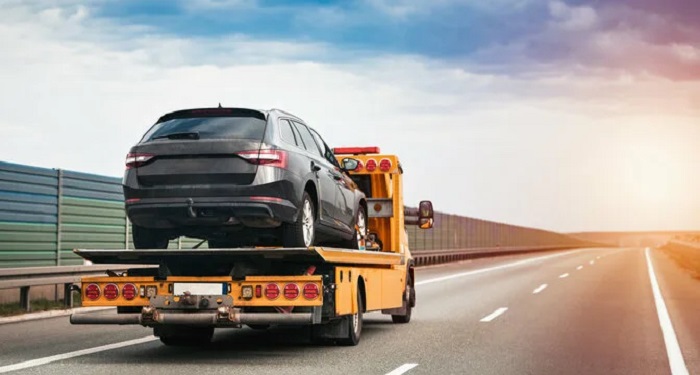
Towing a vehicle helps you get to a service center or safe location in the event of a breakdown, dead battery, fuel problems, or other issues that prevent the vehicle from moving on its own. However, improper towing practices can lead to an accident and damage to the transmission, brakes, and body components.
Before towing, it’s important to assess the situation: are the steering and brakes working properly, is it possible to securely attach the tow rope, and is the road suitable for towing. If conditions are unsafe or there’s a risk of damage to the vehicle, it’s best to book a towing service on https://mtstowing.ca/.
Basic Towing Rules
Towing is only permitted if the steering and brakes of the towed vehicle are functional. The driver of the towed vehicle must be behind the wheel and control the trajectory, distance, and braking.
Choosing a method: cable, rigid hitch, partial load
- A flexible hitch (cable) is suitable for most short-distance situations, but requires a high level of discipline: a smooth start, without abrupt braking or jerking.
- A rigid hitch provides a more predictable distance between vehicles and is easier to control, but requires a suitable device and mounts.
- Partial load reduces the load on the transmission and may be preferable for some drivetrain types and gearboxes.
Speed, distance, and maneuvers
Drive smoothly: acceleration and braking should be smooth and predictable. Maintain a steady tension on the tow rope, avoiding slack and abrupt jerking. Consider the increased length of the train when changing lanes, turning, and making U-turns.
- Choose your speed based on road conditions, visibility, and traffic density; it’s safer to drive slower than usual.
- The distance should allow the towed vehicle to react without emergency braking.
- Take wider turns, occupying a lane early and reducing speed.
Signals and Driver Interaction
Agree on simple signals in advance: turning on hazard warning lights, flashing headlights, and making hand signals. The most important thing is to agree on starting, stopping, and what to do in an emergency (for example, if the tow rope becomes loose or you need to urgently pull over).
Summary: When is towing with a tow rope legal?
Towing with a flexible coupling (tow rope) is permitted according to traffic regulations if key requirements for the towed vehicle’s steering system, visibility and marking of the coupling, as well as the driving method and organization of the process are met.
If there is any doubt about safety (bad weather, poor visibility, difficult road conditions, risk of skidding), it is best to abandon towing with a tow rope and choose an alternative: a rigid coupling, a tow truck, or partial loading.
Checking before driving
- The steering of the towed vehicle must be in good working order; Towing with a tow rope is prohibited if the steering is faulty.
- The coupling must be secure and undamaged; the tow rope must be marked (usually with warning elements/flags).
- Driving conditions must allow for safe control of the vehicle’s trajectory and distance; if there is a risk of loss of control, it is best not to tow.
- The driver must be behind the wheel of the towed vehicle and be capable of operating it.